Before I press Enter in an agent session, I want to know what I am sending. A question might need the selection in my editor. It might need one change from the diff. The fact that the editor can see a workspace does not tell me which parts belong in the turn.
Wayline puts a local runtime between Neovim and the provider. The editor works with a common session model while the runtime speaks the provider’s own interface. That is useful for streaming a response, but the first thing I wanted to be able to inspect happens before a response exists.
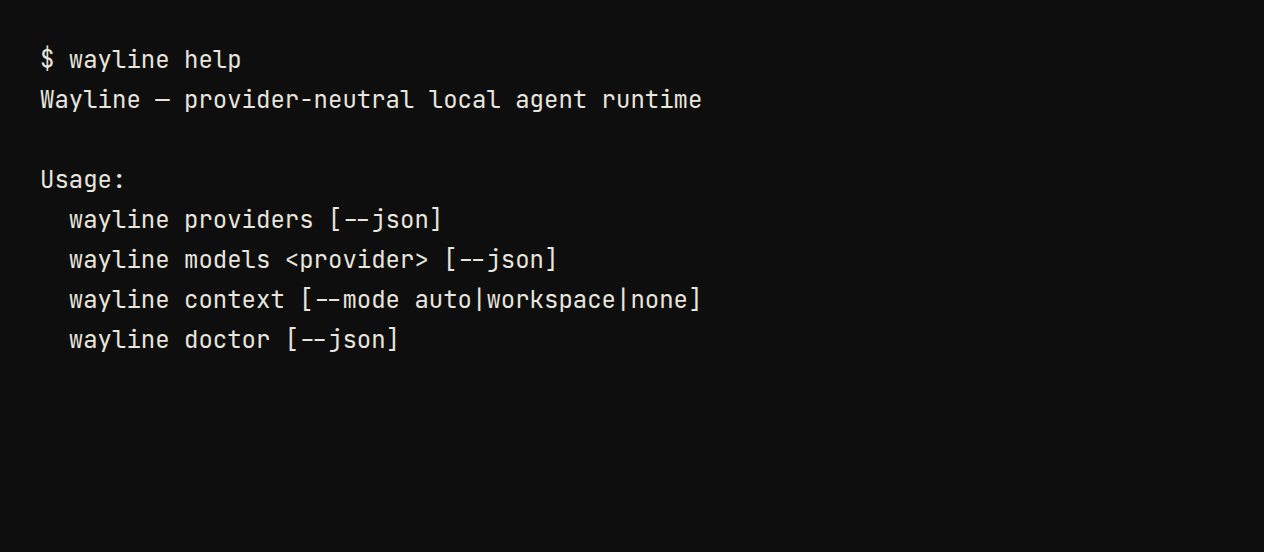
Compare two empty runs
The Wayline case study has two captures from the same empty demo workspace. The context command in none mode reported an empty entries list. Workspace mode added a project entry. Neither command needed a model answer. The difference is visible because the context selection has its own output.
Once that boundary is visible, there is a place to ask a better question: does this turn need the file, the selection, the diagnostic or the change? Those are different pieces of evidence, even when they all point at the same line.
Keep the editor honest
An editor integration can make it easy to start a session and still leave the rest of the interaction mysterious. I want the Neovim side to show which provider is active, what context was selected, and where to intervene when the work needs a decision.
Wayline is still in development. That makes the small captures valuable: they show one behavior I can check today, without making promises about every provider or every editor workflow.